Havana July 20 - Itinerary
Hotel Nacional to exchange money at the Cadeca
 Fine arts museum was closed due to lack of electricity in old Havana
Lunch at la Torre restaurant on the 33rd floor with a spectacualr view
Visit to the flea market for educational and cultural materials (shopping)
Cenesex National Sexual Education Center
Explore a typical neighborhood with a friend
House of Music for evening Cultural Activity on our own
Observations of the day
American music is everywhere, Tourists from other countries are everywhere.
Others may come visit Cuba, but most Cubans can not visit other countries.
People are not afraid to talk to us, well some people are afraid to talk to us.
Electricty
Cuba is not known for the reliability of it's electrical grid. Today we found that out as our plans to tour the Cuban National Art Museum fell through because they were closed due to an electrical outage in Old Havana. We ended up going to the flea market in Old Havana where the local artisans sell their art in a hug warehouse structure, in a competitive free market style.
Free Enterprise and Cultural Art
 Artists have been one group of people in Cuba that have consistently been allowed to market and sell their work without state sponsorship. Albeit, artistic expression is censured by the state, and there was no art on dislay that was at all critical of the government or country for that matter. Nonetheless, our tour guide gave us 90 minutes to wander through the huge warehouse, provided by the state, that held hundreds of local artists with their creations to sell. Everyone came away with something treasured. I bought a set of clave sticks, a guayabera shirt, a nice white linen dress, two wooden fans, a purse of seeds, and a shell box. Most of the artwork was local, but a few things that appeared to be Chinese imported items were also present. It was interesting to see that the art market functioned like other market places I had been to in the Carribbean. Artists would openly solicit your business and most were willing to haggle over prices. While the state run tourist food and hotel prices have been expenses, I found the art to be very affordable. Because these artists were able to operate in a free market based on CUCs(dollars), they actually made a fair living. Considering that the average Cuban working at their government run jon earned about $20 per month, artists actually make much more money than others (including doctors). For that matter anyone working in the tourism industry made more money than the avergae person, because they have access to dollars instead of pesos.

Cuban Monetary System
Cuba operates on two forms of money. The National Peso and the CUC. The peso is what Cubans are paid by their employers (mostly the Cuban government). The CUC is what tourists must use on the island. When we arrived we changed dollars into CUCs. For every $1 US you get .87 CUC, or each CUC costs $1.13. This makes Cuba expensive for tourists from the US. Technically, tourists are not allowed to have or use the national peso, they must use the higher valued currency. The exchange rate on pesos to CUC is about 24 pesos - $1. So as you can clearly see, if I spend 5$ CUC on a piece of art, that actually means 120 national pesos for the artist.
Artists in this market were paid in CUC currency, but could shop for some of their basic living necessities using the national peso. Additionally, because they possessed CUCs they had the ability to also shop at special stores where only CUC was accepted. These stores are often called dollar stores. Wesaw several of these stores that have items in them that many people in the United States may buy often. CUCs also provide purchasing power in the informal black market economy where many items could be found that were not available at the state run stores accepting national pesos. Many items for sale in the black market are also for sale in the dollar stores, only at a higher price.
I did not have the opportunity to see first hand the informal black market in operation, however, credibly research that I did on my return uncovered a thriving black market that exists outside of the formal planned economy. A researcher, spending one year in Havana, during 2005 observed families turning daily to the black market for items such as milk, coffee, eggs, cheese, and beef. Additionally, people relied on the black market for clothing and shoes, computers, internet access, and many "luxury" items not available in the state run stores. During my stay in Cuba, I did not observe any malls for people to shop for clothing and shoes in, but people seemed to be wearing clothing that was modern and factory made.
 |
| Dollar Store (Government run?) |
 |
| Government run Havana Bodega (ration store) where National Pesos are accepted |
Speaking of money, there are other means for Cubans to earn CUCs, being a worker in the tourist industry.

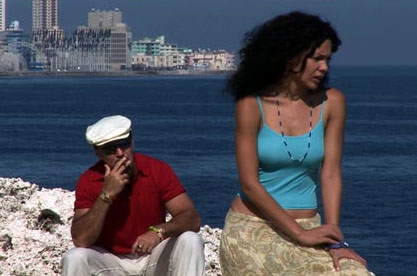 There is a down side to new focus on tourism as a means for economic growth. Cuba's history from the 1920s through the 1950s included rampant Cuban government corruption, bootleg operations by US gangsters (Al Capone included), racetrack rackets, mob run gambling operations, drug smuggling operations, and high-end prostitution operations. These operations were financed by organized crime figures from the US that paid off corrupt Cuban officials lots of money to look the other way. Our group witnessed some of the legacy of this period of Cuban history one evening as we set out to find some salsa music entertainment. Dozens of young Cuban girls, and dozens of strong Cuban male security guards were operating out of the establishment we visited. We were caught by surprise after we paid our $15 CUC as a cover charge, to discover the situation unfolding inside. It was not a pretty sight. Prostitution is still alive in Cuba, with women mainly catering to tourist men for their opportunity to earn CUCs. Beautiful, young Cuban girls, can undoubtably make a lot more money in prostitution then the $20 per month that a state run job can offer them.
 |
| Grounds of the Hotel Nacional |
 |
| Havana from 33 floors up! |
 |
| Lunch at la Torre - 33floors up in the elevator |

No comments:
Post a Comment